Preachers on the Side of the Enemy… This is How Religious Awareness Is Being Reshaped to Serve Normalization Projects
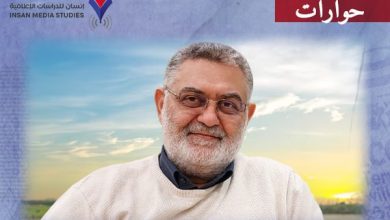
Kuwaiti Preacher and Thinker Dr. Mohammad Al-Awadhi:
- Attempts to neutralize Islam from politics, justice, and resistance against injustice reached their peak with the new wave of normalization.
- The normalization phase witnessed the most dangerous process of reformulating religious discourse, leading to replacing the jurisprudence of Jihad (Fiqh al-Jihad) with the jurisprudence of obedience (Fiqh al-Ta’ah).
- Besieging the influence of political Islam and removing it from the public sphere through a discourse that redefines Islam as a religion stripped of resistance and dignity.
- The discourse goes beyond emptying religion of its substance to reshaping the image of the enemy in the Islamic consciousness, such that the resistance fighter becomes the problem.
- The new discourse is neither religious nor “intellectual enlightenment”; rather, it is a political project aimed at reshaping doctrine and domesticating concepts.
“Insan for Media” – Editorial Team:
In a new episode broadcast by the “Rawasikh” platform on YouTube on Sunday, November 23, 2025, Kuwaiti preacher and thinker Dr. Mohammad Al-Awadhi addressed one of the most dangerous phenomena in the contemporary religious scene: the systematic shift led by a number of preachers and religious figures toward a discourse that empties the concepts of Jihad and resistance of their Islamic law (Sharia) and historical meanings, reformulating them within a context that serves the wave of normalization and “Abrahamic” projects that restructure Islamic consciousness in line with new international balances.
Al-Awadhi views this shift not merely as a jurisprudence dispute, but as part of a broad attempt to manufacture a “tamed” version of Islam based on the jurisprudence of obedience rather than the jurisprudence of Jihad, and on justifying alleged stability instead of resisting aggression.
Jihad… From an Established Value to a Stripped Concept
Al-Awadhi reviews the beginnings of this deviation, recalling that since its revelation, Islam has borne the banner of justice and instilled in souls the values of pride, dignity, and striving against oppression and aggression.
He says: These values remained present across the centuries until the Islamic world witnessed waves of occupation, followed by Westernization and forced secularism, which opened the door for a generation of “diluters” who sought to destroy Islam from within by emptying its fundamental concepts, chief among them Jihad.
Over recent decades, attempts to neutralize Islam from politics, justice, and resistance to oppression accelerated until they reached their peak with the new wave of normalization, where efforts were directed at turning Islam into a religion stripped of dignity and boundaries, required only to justify reality rather than change it.
Al-Awadhi points out that the normalization stage witnessed the most dangerous operations of reformulating religious discourse, leading to the replacement of the jurisprudence of Jihad with the jurisprudence of obedience, killing the principle of “separation/dissociation” (Al-Mafasalah) under the pretext of the “jurisprudence of consequences” (Fiqh al-Ma’alat), and suppressing legitimate anger through a discourse that raises the slogan of “tranquility” (Al-Sakinah). He clarifies that within this framework, religious figures emerged playing central roles in redistributing Islamic legal terms to fit the scale of new international projects.
Preachers Representing the Model of “Institutional Obedient Islam”
Al-Awadhi provides an example with Sheikh Abdullah bin Bayyah, Chairman of the UAE Council for Fatwa, who leads a discourse that frequently speaks of “preservation of life” as the highest objective of Sharia, while remaining silent regarding the Zionist massacres in Gaza.
He cites the statement of the Muslim Council of Elders during the 2021 aggression, which described what was happening in Jerusalem as “tension” and “violent confrontations,” avoiding words like occupation, massacre, bombardment, or terrorism. He considers this discourse to represent the pinnacle of complicity by embellishing reality and softening the vocabulary describing the atrocities of aggression.
He also criticizes Bin Bayyah’s participation in international events alongside prominent Zionist figures, such as Rabbi David Sholom Rosen, International Director of Interreligious Affairs at the American Jewish Committee and former Chief Rabbi, considering this an embodiment of the integration of certain religious elites into projects serving normalization.
Al-Awadhi highlights the case of the Yemeni preacher Sheikh Ali Al-Jifri, whom he sees as representing the “most complete model of obedient Islam in institutional Sufi garb.” He pauses at the Tabah Foundation, which enjoys broad facilities from normalizing regimes, while other dawah institutions face restrictions.
He points to reports speaking of financial and political support provided by these regimes to Al-Jifri, Bin Bayyah, and others to “export the image of Abrahamic moderate Islam” at the international level.
According to Al-Awadhi, the objective of this framework is clear: besieging the influence of political Islam and removing it from the public sphere through a discourse that redefines Islam as a religion stripped of resistance and dignity.
He states that this discourse does not stop at emptying religion of its content, but extends to reshaping the image of the enemy in the Islamic consciousness, so that the resistance fighter becomes the problem, rather than the occupier.
Al-Awadhi explains that Islamic consciousness was clear for decades: the enemy is the Zionist occupation. However, the new discourse inverted this compass; thus, the resistance fighter became accused of aggression, the blood of martyrs became a “result of the stubbornness” of the resistance, while the occupier is implicitly exonerated from its crimes.
Shifting Religious Discourse and the Downsizing of the Palestinian Cause
Al-Awadhi reviews the statements of Sheikh Osama Al-Azhari, Egyptian Minister of Endowments, in which he described the Palestinian cause as a “means used by Islamists to incite against the state,” even claiming that the Islamists’ accusations against the state “intersect with the discourse of the occupation.”
He notes that the Emirati-Jordanian preacher of Palestinian origin, Waseem Yousuf, held the resistance responsible for the Zionist genocide because it “defended itself,” while implicitly exonerating the occupation, considering that “the real enemy is the one who incites hatred.”
As for Adnan Ibrahim, a preacher of Palestinian origin residing in Austria, Al-Awadhi sees that he avoids attacking the occupation directly, but attacks Islamists under the claim that their incitement to Jihad “brought disasters upon the nation,” which he considers a discourse that reinforces the occupier’s narrative.
Attacks from Outside the Religious Framework.. False Enlighteners
Al-Awadhi describes Egyptian TV host Ibrahim Eissa as the “leader of a trend that demonizes everything Islamic,” pointing to his focus since October 7 on accusing the resistance of being the cause of Gaza’s destruction, while not directing a tenth of a tenth of such criticism toward the occupier.
He also reviews the stances of Egyptian academic and heritage researcher Youssef Ziedan, in which he denied the sanctity of the Al-Aqsa Mosque. In the context of the recent genocide, he placed full responsibility on the resistance and considered “defensive Jihad” (Jihad al-Daf’) an act charged with hatred.
Al-Awadhi criticizes the Egyptian philosopher Mourad Wahba, who wrote an article in January 2024 in Al-Ahram demanding a fight against the “terrorism of the resistance,” while boasting about his visits to Israel and his meetings with Rabin.
In conclusion, Al-Awadhi emphasizes that this discourse is neither “religious ijtihad” nor “intellectual enlightenment”; rather, it is a clear political project aimed at reshaping doctrine and domesticating concepts that threaten Western hegemony and its allies in the region.
He adds that this discourse aims to convert Islam from a religion possessing power and a banner into an obedient religion that does not disturb the normalizers nor embarrass the Zionists.
He concludes by affirming that the current phase is a decisive historical moment in which faith, Sharia, and the awareness of the Ummah are being waged war upon. He considers naming names not to be defamation, but a religious duty as long as these preachers display their ideas on pulpits and screens, and that remaining silent about this deviation is a betrayal of the truth and the blood of the oppressed.