Global Media and Armed Conflicts: Analyzing Patterns of Bias Towards Western Policies in the Coverage of the Iraq, Ukraine, and Gaza Wars
- Fragile Verification and Eroding Standards: How the wars exposed a professional crisis in Western journalism.
- Manufacturing Pretexts and Faking Consensus: Tools of systematic deception in the Iraq War.
- Geopolitical Bias in the Russian-Ukrainian War: The Euro-American narrative over neutrality.
- Selective Coverage of the Gaza War: Unilateral humanization and the erasure of the Palestinian victims’ human dimension.
- Directing Media Discourse: The influence of Zionist lobbies, the Western Right, and ownership control.
“Insan for Media” – Studies Department:
Introduction
Global media serves as one of the most prominent tools for shaping collective consciousness and directing public opinion, particularly during crises and wars. In these times, facts intertwine with directed narratives, and language and imagery are employed to consolidate narratives that serve the interests of major powers.
This role has manifested clearly in Western media coverage of several conflicts in recent decades, beginning with the 2003 U.S. invasion of Iraq, through the Russo-Ukrainian War, and up to the repeated Israeli military operations in the Gaza Strip.
A comparison of these coverages reveals systematic biases in Western media discourse, reflecting the political and ideological frameworks of Western nations and their strategic interests. It contributes to the reproduction of representations of the “Other” within a semantic structure that serves this orientation.
Hence the importance of this study, which seeks to analyze patterns of bias in global media when covering these wars, deconstructing their political, intellectual, and humanitarian implications, while highlighting their impact on shaping global public opinion.
Study Problem
The primary problem centers on the following question: How does Western media coverage of the wars in Iraq, Ukraine, and Gaza demonstrate a bias that reflects Western policy trends, and what are the implications derived from this bias?
This question branches into several sub-questions:
- What is the nature of Western media discourse toward Iraq, Ukraine, and Gaza?
- What tools and methods of bias did Western media outlets adopt in covering these wars?
- How does this bias reflect the political and cultural vision of the West toward the Middle East and Russia?
- What are the repercussions of this media discourse on the formation of international public opinion and the image of the “Other”?
Methodology
The study relies on a Comparative Critical Analytical Approach, based on:
- Content Analysis: Of a selected sample of Western media outlets (e.g., BBC, CNN, The Guardian, Fox News, etc.) during the three wars.
- Temporal and Contextual Comparison: Of the nature of the discourse and terminology used in each war.
- Discourse Analysis: To uncover the semantic and ideological frameworks underlying the media language.
- Review of Previous Literature: Addressing Western media and its structural biases.
Study Axes
- Theoretical Framework: Media as a tool for hegemony and soft power.
- Coverage of the Iraq War (2003): Between the discourse of “liberation” and the legitimization of invasion.
- The Russo-Ukrainian War: Double standards in describing the victim and the aggressor.
- Coverage of the Aggression on Gaza: The erasure of the human dimension and the justification of genocide.
- Characteristics of Bias and Political Implications in Western press coverage of wars.
I. Theoretical Framework – Western Media as a Tool for Hegemony and Soft Power
Western Hegemony, according to Italian thinker Antonio Gramsci, is an intellectual and cultural dominance rather than an economic or military one. It enables ruling regimes to make their vision of international issues and political/military practices accepted as “universal truths,” allowing them to impose their goals on international reality. Media plays a pivotal role in entrenching these mental perceptions.
In this context, media outlets act as a system for producing meanings that support Western hegemony by choosing what to show and what to ignore, how to present events, and which messages to reinforce. [1]
Western media, especially during wars, are tools of Soft Power. Soft Power is the ability of a state or entity to influence others through attraction, values, and ideology, rather than just military or economic force. Within this framework, media is essential because it transmits values and visions that make others “want what the state wants,” rather than having it forced upon them.
Therefore, media is not merely a means of transmitting information but an arena for symbolic control. The book Media, Ideology and Hegemony explains how Western media institutions use old and new media to control global collective consciousness, emphasizing that media represents the intersection of cultural hegemony and soft power.
Mechanisms of Media as a Tool for Hegemony:
- Agenda Setting: Determining which issues are presented and which are neglected to shape what the public considers “important.”
- Framing: Defining how an event is presented, the terms used, and identifying who is the victim and who is the aggressor.
- Representation & Symbolism: Using symbols and narratives that serve hegemonic interests (e.g., entrenching a consumerist culture).
- Repetition & Normalization: Through repeating certain images, the public accepts them as “natural” facts.
- Marginalization of Counter-Narratives: Focusing on a single narrative while distorting or ignoring opposing views.[2]
II. Media Coverage of the Iraq War (2003): Between “Liberation” and Legitimizing Invasion
The 2003 U.S.-British war on Iraq is a prime example of Western media bias. A study by the European Research Center titled “On Point: The United States Army in Operation Iraqi Freedom” revealed that the toppling of Saddam Hussein’s statue in Firdos Square was entirely media-orchestrated; there were more American journalists than Iraqi participants, and the U.S. Army used them to film the scene from a specific angle, calling it a “Media Circus.”
Before the invasion, the Pentagon selected over 600 “Embedded Journalists” who received protection in exchange for reporting exclusively from the military’s perspective. Meanwhile, U.S. Secretary of State Colin Powell presented false claims about WMDs to the Security Council. Despite AP journalist Charles Hanley exposing these falsehoods a month and a half before the war, his report was ignored by U.S. media because it “did not serve the scenario,” as noted in the documentary The War You Don’t See.
Even after the lies were exposed, Western media continued to portray the U.S. Army as a liberating force, ignoring war crimes in Fallujah and the Abu Ghraib scandals. Major institutions like The New York Times, BBC, The Observer, and CBS News eventually apologized for misleading the public. Fox News was the most extreme, with host Bill O’Reilly famously saying: “If you don’t support the U.S. Army, shut up!”
As Spanish journalist Mercedes Gallego, who was embedded with US forces, revealed, embedded reporters were subject to strict instructions, and those who violated them were denied
protection and information. Her colleague Julio A. Parrado was killed while covering the entry into Baghdad.
A study titled “Embedded Reporting During the Invasion and Occupation of Iraq (2005)” confirms that embedded television reports were more biased in favor of the US military, portraying soldiers positively and promoting its victories, while ignoring the suffering of civilians.[3]
Studies by Fairness & Accuracy in Reporting (FAIR) indicated that U.S. media described the invasion as “liberation” while using euphemisms like “Shock and Awe” instead of “heavy bombardment” and “collateral damage” instead of “civilian victims.”
As for the British press, it supported the war in its own right; analytical studies have shown that newspapers such as The Times sought to confer international legitimacy on the Anglo-American invasion of Iraq.
On the other hand, journalists who deviated from the official narrative were punished. For instance, MSNBC correspondent Peter Arnett was fired after telling Iraqi television that the war was “not going according to plan.”
Furthermore, the U.S. Department of Defense prohibited the broadcasting of images showing dead or captured American soldiers under the pretext of “public taste.” Meanwhile, the media employed euphemistic terms such as “Shock and Awe” instead of “heavy bombardment,” and “collateral damage” instead of “civilian victims” [4].
Dr. Edmund Ghareeb, a professor of Middle East studies at the American University in Washington, states that media coverage transformed into a “mixture of nationalistic cheering and military propaganda,” asserting that Western media completely lost its professionalism in covering this war. He also believes that the adoption of the “embedded journalists” system caused cameras to focus on displays of power and military technology, while ignoring the human tragedies of the Iraqi people.
Dr. James Zogby, president of the Arab American Institute in Washington, adds that the Boston Globe admitted that American coverage concealed crimes committed against civilians and promoted claims of “liberating Iraq” and protecting the Middle East from “weapons of mass destruction.”
This controversy concluded with a poll conducted by America Online involving approximately 1.2 million Americans. When asked, “Do you believe that media coverage of the war on Iraq gives you the full picture of what is happening?”, 80% answered “No,” 13% answered “Yes,” and 7% said they were unsure—a result that reveals the complicity of Western media with Western regimes in misleading public opinion [5]
III. The Russian-Ukrainian War: Double Standards in Describing the Victim and Aggressor
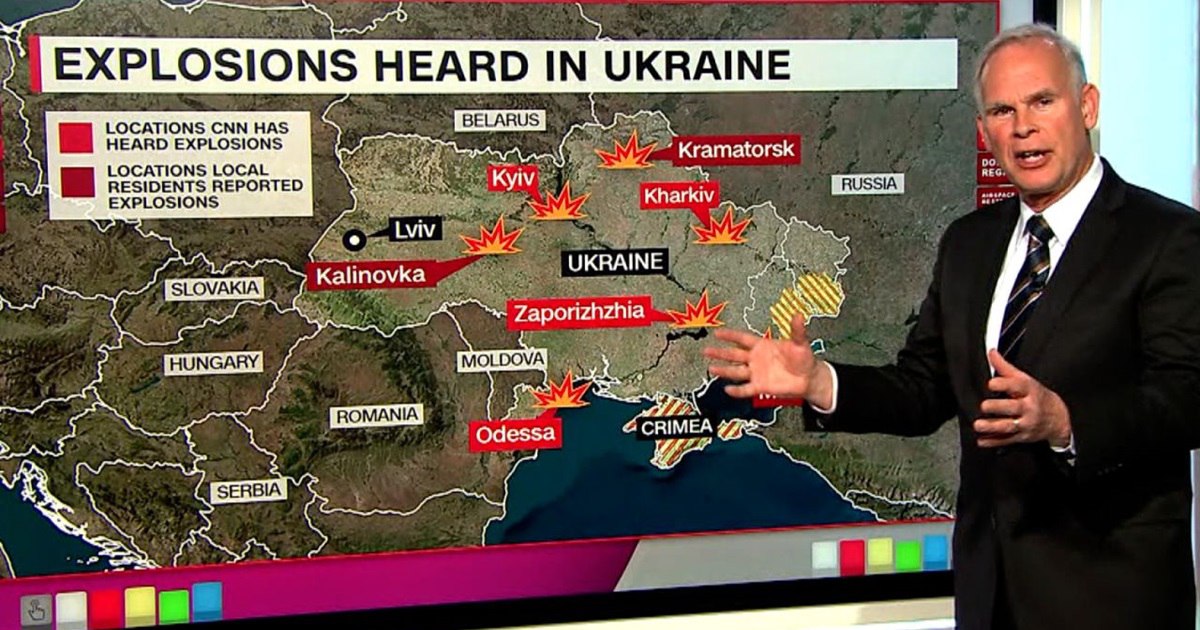
The coverage of the Ukrainian war reveals a loss of professional objectivity. The excessive enthusiasm in handling the Ukrainian case, compared to the coldness toward conflicts in the Islamic or developing world, exposes Western journalism’s double standards.
While Ukrainian refugees were met with exceptional sympathy, testimonies from Arab and African refugees fleeing the same war revealed a “different face of racism” at the borders, simply because they were not “blonde-haired and blue-eyed.” [6]
Examples of Western Headlines:
- BBC News: “A place of slow killing: investigation into the treatment of Ukrainian prisoners…” [7]
- BBC: “Russia and Ukraine: How much is this war costing Moscow?” [8]
- NYT: “Ukraine has become Europe’s war now.” [9]
- The New York Times: “Russia invades Ukraine’s skies with drones, and the West must act.” [10]
- The Times: “An informant in Russian intelligence describes the war in Ukraine as a failure.” [11]
- Financial Times: “The Russo-Ukrainian war will not end with a political solution, but rather with a frozen conflict similar to the Korean War.” [12]
- Wall Street Journal: “America will provide Ukraine with intelligence to strike deep inside Russia” [13]
- Wall Street Journal: “How the Ukraine war changed history.”[14]
- Le Figaro: “These are the Ukrainian messages through the incursion into Russia” [15].
- Le Figaro: “Military personnel in France and other European countries are preparing for confrontation scenarios with Russia” [16].
- The Guardian: “Ukraine targets the Russian depth with Western missiles” [17].
- German Press Agency (DPA): “Chancellor Scholz condemns the ‘brutality’ of the Russian invasion of Ukraine” [18].
- France 24: “Ukraine: America says twenty countries will provide new weapons to Kyiv” [19].
Through these examples, the extent of the extreme bias in the Western press toward the Ukrainian side in the coverage of this war becomes clear.
A BBC report confirmed that the Russo-Ukrainian war revealed the fragility of Western journalistic professionalism, asserting that “professionalism was the first casualty” in this battle. The report also noted that the Russian press, in turn, fell into the same error, as each side aligned with the positions of its respective regime, moving away from accuracy and professional integrity [20].
In the same context, The Washington Post published an article by H.A. Hellyer—a scholar at the Carnegie Endowment for International Peace and a fellow at the Royal United Services Institute (RUSI) in London and Cambridge University. In it, he discussed how the Ukraine crisis exposed racial bias in Western press coverage, emphasizing that Western media was racist and heavily biased toward official Western positions [21].
Collectively, these reports confirm the extent to which Western media and journalism have sunk into the mire of unprofessionalism when covering the Russo-Ukrainian war, and that their bias toward the Western military project in Ukraine was blatant and obvious.
IV. Coverage of the Aggression on Gaza: Erasure of the Human Dimension and Justifying Genocide
Western media discourse in its coverage of the “Al-Aqsa Flood” battle—launched by Palestinian resistance factions against the Israeli occupation at dawn on October 7, 2023—witnessed a shift in the pattern of bias. This shift was not limited to traditional political support but took on a methodical and structural dimension in adopting the Israeli narrative and reproducing it through the media, compared to previous war coverages where bias was linked to the direct national contexts of Western countries.
The crisis of Western coverage manifested in absolute and systematic support for Israel, with an almost exclusive focus on the “right to self-defense” narrative as an explanatory framework to justify military operations. This was done without subjecting this concept to legal or ethical deconstruction, and without balancing it with the humanitarian dimension or monitoring documented violations against civilians in the Gaza Strip.
An analysis of the underlying motives behind this crisis reveals the influence of governing cognitive models in Western media discourse, or what could be termed “Media Cosmology.” This creates a centralized vision holding that news coverage must align with the interests of Western powers supporting Israel, reflecting the presence of Zionist influence systems within media and political decision-making centers. This has led to directing media discourse to serve intertwined Western-Israeli interests.
October 7, 2023, took on an exceptional character in Western media discourse; major media institutions rushed to condemn the resistance’s military operation while amplifying the suffering of Israeli citizens through selective humanization that highlighted individual stories and emotional depth. In contrast, there was an almost complete erasure of the suffering of Gazans, within a framework of dehumanizing the Palestinian side and reframing the conflict according to the duality of “Israeli Victim vs. Palestinian Threat.”
This phenomenon is not accidental; rather, it is repeated in most Western media coverages of the aggression on Gaza, or in conflicts involving a non-Western party or one not allied with Western interests. This indicates a chronic structural bias rather than a mere momentary political stance.
It is also evident that Western media discourse did not adhere to declared professional principles such as neutrality, accuracy, verification, and balance in reporting human suffering. Instead, it was subject to the influence of the interests of parent media companies linked to Israel through networks of economic, political, and media relations across multiple fields, making any departure from the pro-Israel editorial line structurally limited.
With every Israeli aggression on Gaza, justificatory narratives based on concepts like “defense of existence” and “fighting terrorism” are reproduced to justify military crimes, including acts of genocide. This is accompanied by stripping Palestinians of their civil and human rights, demonizing their resistance, and denying their historical narrative and human and political rights.
The media coverage of Israeli military operations in Gaza reflected a racial bias based on a clear distinction in human value between the two sides of the conflict. It serves as evidence of the alignment of interests between Western media and Israel, while ignoring the humanitarian tragedies in the Strip [22].
The following are some examples of Western coverage of the Al-Aqsa Flood battle:
- The Washington Post: “Israel has the right to defend itself” [23].
- Financial Times: “Letter: Case for the prosecution. What about the defense?” [24].
- The Australian: “Drawing red lines in Gaza war” [25].
- The Wall Street Journal: “Israel acted in self-defense and Washington did not participate in the operation” [26].
- The Wall Street Journal (citing Al Jazeera): “Israel defeated its enemies and defended its right” [27].
- Le Figaro: “Israel hardens its position on Gaza and the Syrian Druze” [28].
V. Characteristics of Bias and Political Implications
Based on the previous examples of war coverage by the Western press, it is evident that multiple facets of double standards exist. Furthermore, the editorial directions and the nature of the messages embedded in analyses and reports—especially in the English-language versions—appear entirely biased toward Western agendas.
In light of this biased coverage, Western media has lost its footing in the Middle East and among the free people of the world. It has squandered much of its reputation built on neutrality, objectivity, and professionalism, regardless of political interests, profit-and-loss calculations, or the diplomatic balancing of interests.
The Arab observer of Western media—particularly those outlets that direct a portion of their “services” in the Arabic language—notices clear double standards through their coverage of the Iraq war, then Ukraine, and finally Gaza. Even in the Arabic versions, complete biases toward the Western narrative emerge.
By comparing the stances on the wars in Iraq, Ukraine, and Gaza, we find that humanitarian scenes condemning Western powers disappear from the coverage—as seen with the Abu Ghraib prison scandal and the slaughter of civilians in Gaza. Meanwhile, such scenes appeared prominently in the coverage of the Ukrainian war to condemn the Russian side and showcase its “savagery.” This occurs even though Russian violations in Ukraine represent only a small fraction of the genocidal crimes committed in Gaza and Iraq.
For instance, Western coverage during the first hundred days of the Gaza war revealed a glaring double standard; the margin of human sympathy for the Palestinian side appeared significantly lower compared to its Israeli counterpart. This margin also differed strikingly when comparing the same coverage to the first hundred days of the Ukraine war, where Palestinians found themselves at the bottom of the media sympathy scale.
The American magazine The Nation, in its October 2024 issue, highlighted media monitoring results showing that CNN and MSNBC—platforms that significantly influence American center-left opinions on Gaza—routinely focused on the human suffering and dangers faced by Ukrainians, and on the “victims” and survivors of the October 7 attacks (which claimed about 1,200 lives), far more than they focused on Palestinian victims, despite the death toll in Gaza exceeding Ukrainian fatalities by 500%. The magazine noted that the monitoring was limited to these two “liberal” platforms, excluding others like Fox News, because Republican support for Israel far outweighs that of liberals, making the pro-Israel tilt of Republican-leaning platforms a foregone conclusion.
In the same vein, the Al-Azhar Observatory for Combating Extremism issued a publication titled “Western Media’s Violation of Professional Standards and Its Complicity Against the Gaza Strip,” stating that much of the Western coverage of “ethnic cleansing and genocide” in Gaza revealed gross violations of professional standards. The Observatory also pointed to a petition signed by nearly 750 journalists from major institutions like the Washington Post, Los Angeles Times, and The Guardian, in which they condemned the killing of journalists in Gaza and urged media outlets to use precise terms such as “apartheid” and “genocide” to express the atrocity of the crimes committed against Palestinians. The Observatory considered this petition damning evidence of Western media’s manipulation of content related to Gaza and the occupied Palestinian territories, rendering them a “complicit party” in the ongoing genocide.
A defining characteristic of Western media discourse is that the language and terminology used—across various outlets—have lost the foundations of neutrality and objectivity. Annabelle Lukin, a linguistics professor at Macquarie University in Australia, emphasized that language in press coverage is not inherently neutral. In her article, “When it comes to media reports on Israel and Palestine, there is no place to hide,” she argues that language forces its user to take a side when discussing the violence in Gaza.
Results
Based on the aforementioned coverage, it becomes clear that a vast sector of Western media addresses a domestic Western audience—governments, peoples, and lobby groups—while its Arabic platforms adopt a dual approach: one that satisfies the Western recipient and another that attempts to absorb Arab anger [29].
Western Media coverage has demonstrated a clear racist tendency in its handling of “non-Western” issues, influenced by preconceived ideas, stereotypes, and prejudices, as well as a historical and cultural legacy spanning centuries that reflects Western superiority and colonial interests. This orientation has been linked to official institutions ranging from intelligence agencies to foreign policy departments.
Furthermore, these coverages have revealed that the Western media machine has no connection to the moral values and principles it claims; rather, it moves according to interests defined by Western decision-making centers and global Zionism seeking hegemony and control. Consequently, these institutions have lost their neutrality and professionalism, violating their own principles in pursuit of their interests and the ambitions of their funders.
It has also become patently clear that these media outlets are subordinate to the interests of Western authorities and the Zionist lobby, adopting fabricated narratives without verification. This has contributed to the dehumanization of the peoples against whom the West wages its wars, foremost among them the Palestinian people. Thus, resistance is demonized and its legitimacy denied, while public responses are engineered through fear and provocation to serve Western hegemony.
The West—led by the United States—has used media propaganda as an influential tool in shaping public opinion and justifying wars. “Media Zionism” has dominated a large part of this media, defending Israeli crimes, justifying them, and ignoring the human tragedies in Gaza and the images of mass killing and genocide. The Western media machine cannot deviate from the editorial line drawn by its parent companies, which maintain close ties with international lobbies across multiple fields.
Critics believe that Western media practiced selective framing of events in Gaza, Iraq, and Ukraine, in a behavior that contradicts professional ethics, objectivity, and independence. Anyone who opposes the West is presented in the image of the “Demonic Other” through negative content and the stripping of their human legitimacy. Thus, Palestinian resistance, for example, is depicted as “terrorism” within a predetermined pattern against the “non-Western Other” [30].
In light of this, it can be said that humanity has not known in its modern history tragedies more profound than those of Iraq and Gaza, which revealed the collapse of the Western civilizational and cultural model. Perhaps the Western stances on these tragedies illustrate what Samuel Huntington said decades ago: “The values we preach are values specific to us, not to others; values whose benefits extend to us, not to others.”
Accordingly, it is clear that Western media coverage lacks neutrality, as it is directed according to an integrated system of political and ideological interests. While the American invasion of Iraq was portrayed as “liberation,” the Russo-Ukrainian war was presented as “aggression,” whereas Palestinian resistance is often presented as “terrorism.” This discrepancy does not reflect a difference in facts, but rather in the West’s position relative to the parties of the conflict and its direct interests.
Recommendations
- Support Critical Media Studies in Arab universities.
- Establish Arab and International Media Platforms with a balanced, professional global discourse.
- Strengthen cooperation between Arab and Western researchers to develop neutral analytical models.
- Increase critical awareness among the Arab public regarding Western coverage.
- Demand international standards for objectivity in conflict coverage.
Conclusion
Western journalism remains “professional” only when it does not involve the historical East-West conflict. It is deeply tied to Western geopolitical interests. It is a mistake for Arabs to accept these narratives as absolute truths. They must be scrutinized with a critical eye, and professional media institutions must be launched to present facts and refute fabricated narratives.
————————
Sources:
[1] “Western Cultural Hegemony and the Role of Social Media,” Oxford Political Review, April 15, 2024,
[2] “Soft Power and Hegemony,” Journal Filsafat, February 1, 2024,
[3] “Marketing the Illusion: Journalistic Collusion in Wars,” Iraq Today, March 26, 2022,
[4] “Western Press Review: European Support for the US in Iraq, Peace in the Middle East, and Iran,” Radio Free Europe, December 24, 2003,
[5] “Covering the War the American Way,” SWI swissinfo.ch, April 7, 2003,
[6] “How the War on Ukraine Exposes Despicable Western Double Standards,” Al-Manar, March 4, 2022,
[7] “’A Place of Slow Killing’: BBC Investigates Treatment of Ukrainian Prisoners Inside Notorious Russian Prison,” BBC News, September 25, 2025,
[8] “Russia and Ukraine: How Much is This War Costing Moscow?” BBC, March 31, 2022, https://www.bbc.com/arabic/world-
[9] New York Times: “Ukraine Has Become Europe’s War Now,” BBC, March 3, 2025,
[10] “New York Times: Russia Invades Ukraine’s Skies with Drones and the West Must Act,” Published On, September 15, 2025,
[11] The Times: “Russian Intelligence Informant Describes the War in Ukraine as a Failure,” Al-Quds Al-Arabi, March 7, 2022,
[12] Financial Times: “The Russia-Ukraine War Will Not End with a Political Solution, but with a Frozen Conflict Similar to the Korean War,” Al-Quds Al-Arabi, December 13, 2022,
[13] Wall Street Journal: “America to Provide Ukraine with Intelligence to Strike Deep into Russia,” CNBC Arabia, October 2, 2025,
[14] Wall Street Journal: “How the Ukraine War Changed History,” Al-Basala, May 4, 2022,
[15] Le Figaro: “These are the Ukrainian Messages through the Incursion into Russia,” Al-Quds Al-Arabi, August 13, 2024,
[16] Le Figaro: “Military Personnel in France and Other European Countries Prepare for Confrontation Scenarios with Russia,” March 31, 2025,
[17] The Guardian: “Ukraine Targets Russian Depth with Western Missiles,” Rose Al-Yousef, November 21, 2024,
[18] “Chancellor Scholz Condemns the ‘Brutality’ of the Russian Invasion of Ukraine,” German Press Agency (DPA), June 16, 2022,
[19] “Ukraine: America Says Twenty Countries Will Provide New Weapons to Kyiv,” France 24, May 23, 2022,
[20] “Russia and Ukraine: Have Media Freedom and Objectivity Become Victims of the War?” BBC, March 13, 2022, https://www.bbc.com/arabic/interactivity-60729496
[21] “Washington Post: The Ukraine War Revealed Western Media and Political Bias… Wars Only Happen in Poor and Distant Places,” Al-Quds Al-Arabi, March 1, 2022,
[22] “The Stance of Western Media on the War on Gaza,” Yemen, January 27, 2025,
[23] “Washington Post: Israel Has the Right to Defend Itself,” Al-Jazeera, November 7, 2023,
[24] “Letter: Case for the prosecution. What about the defense?” Financial Times, February 23, 2024,
[25] “Drawing red lines in Gaza war,” The Australian, April 26, 2025.
[26] “Wall Street Journal: Israel Acted in Self-Defense and Washington Did Not Participate in the Operation,” Lebanon Today, October 26, 2024,
[27] “Wall Street Journal: Israel Defeated Its Enemies and Defended Its Right,” Al-Jazeera, April 26, 2024,
[28] “Le Figaro: Israel Hardens Its Stance on Gaza and the Syrian Druze,” Monte Carlo, March 3, 2025,
[29] “Double Standards: The ‘Media Setback’ in Gaza and Lebanon,” Independent Arabia, November 15, 2024, https://goo.su/OI9hKaS
[30] “The Stance of Western Media on the War on Gaza,” Yamanyah, January 27, 2025, https://goo.su/Epn13